 Simple Paint Travel

Maldives on a budget: what a week actually costs from Pakistan
Start with the honest total, then the parts. For one person, two sharing a room, seven days on local islands in the shoulder season (April–May or October–November), the trip comes to about $1,000–1,500 — roughly Rs 276,000–414,000. The flight is more than half of it, which is why the route you pick matters more than the hotel you pick.
- Return flights: $595–840 (about PKR 164,000–232,000) from Karachi or Lahore via Colombo or a Gulf hub. December fares run higher.
- Guesthouse, 6 nights: $150–240 per person — a double room at $50–80 a night, split two ways, usually with breakfast.
- Green tax: $36 — $6 per person per night at small guesthouses.
- Food: $105–175 — about $15–25 a day eating at local cafés: mas huni and roshi for breakfast, grilled fish and rice for dinner.
- Transfers: $50–70 — a shared speedboat return plus one or two inter-island hops. The public ferry costs almost nothing (see below).
- Activities: $80–135 — a snorkelling day trip and a sandbank trip. A whale-shark day adds about $90.
Two taxes sit on top of most quoted prices, so read every rate twice. The tourism goods and services tax is 17%, a 10% service charge is standard, and the green tax above is charged per person per night — $6 at guesthouses with 50 rooms or fewer, $12 at resorts. A room quoted at $80 can settle near $103 once the maths is done. Ask for the final figure, in writing, before you pay anything.
Peak season (December to February) pushes room rates up sharply, and the monsoon months (June to September) cut them 30–50%. The cheapest Maldives trip is a monsoon trip — you trade some rain and rough seas for the lowest prices of the year. Shoulder months are the middle ground: decent weather, sane prices, fewer crowds.
Do Pakistanis need a visa for the Maldives?
No — and this is the easiest part of the trip. Pakistani passport holders get a free 30-day tourist visa on arrival at Velana International Airport in Malé. There is no embassy visit, no advance application and no fee. The visa is extendable up to 90 days in total, but that needs a separate application at the immigration office in Malé, and no normal holiday needs it.
Free does not mean paperwork-free. Immigration expects four things when you land: a machine-readable passport valid for at least six months beyond arrival, a confirmed return ticket, a prepaid booking at a registered hotel or guesthouse covering your stay, proof you can pay for your stay, and the IMUGA Traveller Declaration — a free online form every traveller must submit within 96 hours before arrival, one per person including children. The booking is the detail that slows people down: a reservation at an unregistered guesthouse, or a vague confirmation, can hold you at the counter while your ferry leaves.
If you want to stay longer than 30 days, apply for an extension at the immigration office in Malé before the first 30 days run out — extensions come in 30-day blocks up to 90 days in total and carry a processing fee. In practice, a week or two on local islands never needs one, so treat the extension as a backup plan, not part of the trip.
Do the IMUGA form yourself at imuga.immigration.gov.mv — it takes about ten minutes and costs nothing. If an agent tries to charge you for the visa or the form, walk away. The official rules are on the Maldives Immigration website, and the British Foreign Office travel advice for the Maldives is a useful second check on entry rules and local laws.
Flights from Pakistan to Malé: the Colombo route vs the Gulf hubs
There are no direct flights between Pakistan and the Maldives. Every trip connects once, and the connection you pick decides both the price and the length of your travel day.
The value route is SriLankan Airlines via Colombo. The airline flies non-stop from Karachi to Colombo in under four hours, and a Lahore–Colombo non-stop started in September 2026. From Colombo it is a short hop of about an hour and a half to Malé, usually on the same ticket with one baggage rule. Recent snapshots put Karachi–Malé returns from about PKR 163,934 and Lahore returns in December between PKR 211,664 and PKR 231,162, with one-way fares from Karachi near Rs 125,000 and from Lahore near Rs 128,000. The total journey runs about 9–10 hours. Islamabad travellers still connect — over Karachi or Lahore, or through a Gulf hub — since there is no SriLankan non-stop from Islamabad.
The Gulf routes — Emirates via Dubai, Etihad via Abu Dhabi, Qatar Airways via Doha — run daily and are easier to book, but the journey stretches to 12 hours or more and the fare is usually higher. Dubai is the most flexible fallback when Colombo dates do not line up, and it is worth pricing both before you commit. One useful bonus of the Colombo route: Pakistanis get a free 30-day ETA for Sri Lanka, so a one-night stopover in Colombo costs nothing in visa terms — check the current rule before you book, as these lists change.
Book the flight first and the guesthouse second, because the flight is the fixed cost and the rooms flex around it. Fares spike hard in December and January, soften in late January, and are lowest in the monsoon months. And check your arrival time: if you land in Malé after 3 pm, the cheap public ferry has already left, and you will pay $25 for a speedboat instead of $2–3 for the ferry.
Local islands vs resort islands: the choice that decides your budget
The Maldives has about 1,190 islands across 26 atolls, and they fall into two kinds. Resort islands are one-hotel private islands: you arrive by seaplane or resort speedboat, you eat and drink inside the resort, and a night costs $500–3,000. Local islands are inhabited islands where Maldivians live — Maafushi, Thodhoo, Gulhi, Thulusdhoo and dozens more — where guesthouses have been allowed since 2009 and a room costs $40–150 a night. The water is the same. The reef is the same. The price is not.
Local islands come with rules that surprise first-timers. They are dry islands: alcohol is not sold, and drinking in public can end in arrest and deportation, so save that for a resort day pass or a liveaboard. Swimwear is for the designated bikini beach only — on the rest of the island, cover up out of respect for the people who live there. Fridays are quiet: shops close for prayers and the public ferries do not run. What you give up against a resort is privacy and a house reef at your doorstep; what you keep is the ocean, and you gain the island itself — the mosque, the school, the football field, the fishing boats coming in at dusk. None of this is a problem once you know it; all of it is a problem if you do not. The Maldives on Wikipedia gives a solid overview of the atolls and the local-island system if you want the background.
We plan trips the same way at home — pick the base that keeps the costs honest, then spend on the experience. Our Hunza guide and Skardu guide use the same logic: a simple room, a good day out, and money saved for the part you will remember. On a local island, the part you remember is the reef, not the room.
Maafushi: the easiest first local island
If this is your first Maldives trip, stay on Maafushi. It is about 27 km from Malé, it has around 3,500 residents, and with 46–80 guesthouses it has the widest choice and the lowest prices in the country — competition keeps rooms honest. The cheapest rooms start near $30 a night in low season, and half of the island's guesthouses cost under $78. A double with a private bathroom and breakfast typically runs $50–90.
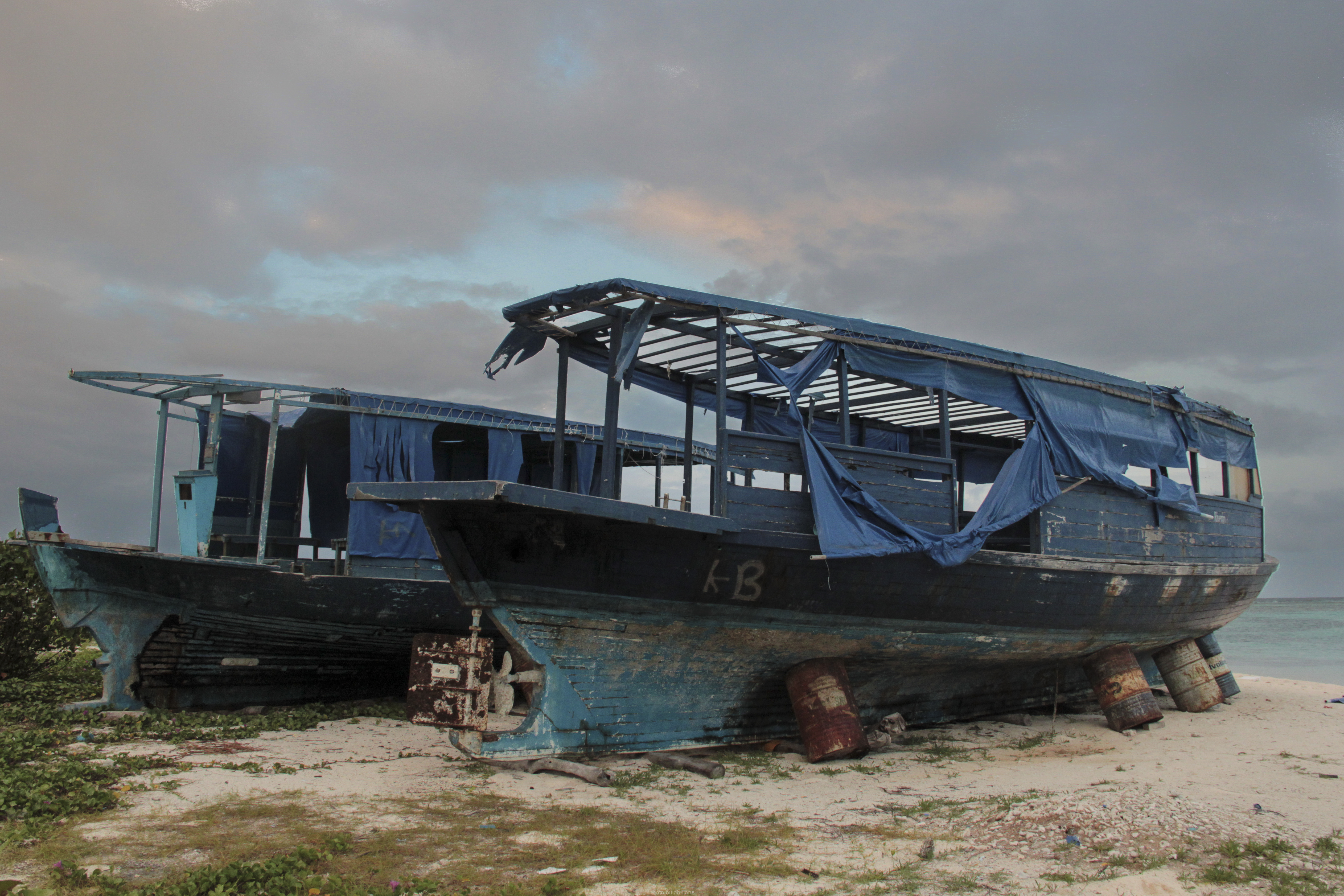
Maafushi works because everything is in one place: a designated bikini beach with soft sand and a shallow lagoon, dive centres on every street, cafés serving grilled fish and rice for $7–12, and more excursion boats than anywhere else on a local island. That competition is why the trips are cheapest here — a full snorkelling day with turtles runs about $35, a sandbank trip with lunch about $45. Read more on the island's background on Maafushi on Wikipedia.
The honest downside: Maafushi is the busiest local island, and it shows. The bikini beach gets crowded in peak season, the main street feels more like a small town than a castaway island, and the snorkelling right off the beach is average — the good reefs are a boat ride away. Book trips the evening before, not the morning of, because the popular boats fill up in December and January. Ask your guesthouse to arrange the airport pickup too: most will meet you at the jetty and walk you to the room, which matters more than it sounds after a 10-hour journey. If you want quiet, spend two or three nights here for the trips, then move on to a smaller island.
Thodhoo, Gulhi and Thulusdhoo: the quieter local islands
Thodhoo is the one we would pick for a slow second stop. It sits in North Ari Atoll, grows the watermelons the Maldives is known for, and has one of the longest beaches of any local island. Rooms start near $28 a night, with half under $89. The trade-off is distance: the speedboat takes about 75 minutes and the public ferry takes four to five hours, so Thodhoo suits travellers with time, not travellers with a tight schedule. The bikini beach here is wide and quiet, but it is not the best snorkelling spot — go for the beach and the pace, not the reef.

Gulhi is tiny — you can walk around it in twenty minutes — and it sits about ten minutes by speedboat from Maafushi, with a transfer cost of about $4. Rooms start near $46, with half under $72. It is the island to pick if Maafushi feels too busy but you still want its trips and ferries close by. The beach is small, the cafés are few, and that is the point.

Thulusdhoo is the surfers' island, known for the break locals call Cokes, and it draws a younger crowd. Rooms start near $26, with half under $65, and the ferry link to Malé is straightforward. The bikini beach is good, the sunset from the harbour side is the best of the three islands, and the pace sits between Maafushi and Gulhi. If you surf, this is the base. If you do not, it is still the cheapest way to be near Malé with space to breathe.
One practical note for all three: book inter-island speedboats through your guesthouse a day ahead, and confirm the day of the week before you pay. Friday kills the public ferry everywhere, and a speedboat booked late on a Thursday evening costs more than the same seat booked on Wednesday.
Getting around the Maldives: public ferries, speedboats and the Friday problem
Transport between islands is where budget trips are won or lost. The public ferries are run by MTCC under the Raajje Transport Link network, and they cost almost nothing: the Malé–Maafushi ferry is about $2–3 one way and takes 90 minutes. Route 309 leaves Malé at 3 pm daily except Friday, with an extra 10 am sailing on Sundays, Tuesdays and Thursdays, and returns from Maafushi at 7:30 am. Buy the ticket at the terminal on the day — you cannot book it in advance, and the timetable follows island residents commuting to Malé in the morning and home in the afternoon.
Friday is the catch. Public ferries do not run on Fridays — it is the weekly day of prayer — so if you land on a Friday, or need to move islands on a Friday, the shared speedboat is your only option. Speedboats from the airport or Malé take 35–45 minutes to Maafushi and cost $20–30 per person each way; Kaani Hotels runs five departures a day at $25 per adult. Longer hops cost more: Thodhoo runs $40–70 by speedboat. Book speedboat seats through your guesthouse — they do this daily and will hold a seat for you.

From the airport, the airport ferry to Malé runs every 15 minutes from 5:30 am to midnight and costs MVR 15 (about $1). Seaplanes only fly in daylight and only serve resorts, so they do not matter for a local-island trip — but they do explain why resort transfers cost so much. The practical rule: land before 3 pm, take the $2 ferry, and save the speedboat money for a snorkelling day.

What to do in the Maldives on a budget: snorkelling, sandbanks and whale sharks
The reef is the reason you came, and on a local island it is cheap. A full-day snorkelling trip from Maafushi — turtles, nurse sharks, a sandbank stop and lunch — runs about $35–45. A sandbank-only trip is about $45 with lunch. These are group boats booked through your guesthouse or a dive centre on the street, and the price includes gear. Bring your own mask if you have one: a mask that fits is worth more than any upgrade.


The one splurge worth planning around is the whale shark. South Ari Atoll is one of the few places on earth where whale sharks are seen year-round, and a full-day trip from Malé or Maafushi costs about $90, with manta rays as a seasonal bonus. Book it for a weekday, go early, and accept that the ocean owes you nothing — some days the sharks simply do not show, and the good operators will tell you that before you pay.
Two more ways to spend wisely. A Discover Scuba Diving session costs about $195 and an Open Water course about $900 — both far cheaper on a local island than at a resort dive centre. And a resort day pass ($100–200) buys you a day of resort beach, pool and lunch without the resort room rate: a good way to see the other side once, then come home to your $60 guesthouse. If you want the island-hopping done for you, this full-day local island tour from Hulhumale visits Gulhi and Maafushi by boat with snorkelling stops and lunch at a local restaurant — a solid first-day option if you land early and want someone else to handle the boats.
A 7-day Maldives budget itinerary from Pakistan
Day 1 — Arrive and cross to Maafushi. Land at Velana, clear immigration with your IMUGA form done, take the airport ferry to Malé (MVR 15), and catch the 3 pm public ferry to Maafushi. If you land late, take the speedboat. Settle in, walk the bikini beach at sunset, eat grilled fish on the main street.
Day 2 — Snorkelling day. Book the full-day snorkelling trip: turtles, nurse sharks, sandbank lunch. About $35–45, back by late afternoon. Day 3 — Sandbank and Gulhi. Morning sandbank trip, afternoon speedboat to Gulhi for a quiet beach evening. The transfer costs about $4.
Day 4 — Move to Thodhoo. Speedboat in the morning (about 75 minutes), slow afternoon on the long beach, watermelon from a farm stall for dinner. Day 5 — Thodhoo slow day. Beach, a sunset fishing trip if your guesthouse runs one, and an early night.
Day 6 — Whale sharks or a resort day. Back toward Malé by speedboat, then the whale-shark day trip to South Ari (about $90) or a resort day pass ($100–200) if the sea is rough. Day 7 — Fly home. Public ferry to Malé in the morning, airport ferry, fly out. If your flight is late, spend the morning in Malé: the fish market and the old Friday mosque are a proper look at the capital most visitors skip.
That is seven days, two or three islands, and a total near the $1,000–1,500 range in this guide. For the latest island and transfer information, the official Visit Maldives tourism board site is the first place to check before you book. We build our Pakistan trips the same way — one good base, one good day out, and money kept for the memory. If that style suits you, our Fairy Meadows guide, Deosai guide and Neelum Valley guide follow the same pattern, and the 7-day northern Pakistan itinerary is the trip that started this channel.