 Simple Paint Travel

Malaysia 7-day itinerary at a glance: Kuala Lumpur, Penang and Langkawi
This route works because it never asks you to backtrack. You land in Kuala Lumpur, ride north to Penang by train, then hop to Langkawi by air and fly home from there through KL. Three stops, three different Malaysias: the capital's towers and food streets, George Town's old shophouses and murals, and Langkawi's beaches and cable car.
- Days 1–3 — Kuala Lumpur: Petronas Towers and KLCC Park, Batu Caves at dawn, KL Tower, Merdeka Square, Central Market, Thean Hou Temple and the Jalan Alor food street.
- Day 4 — KL to Penang: morning ETS train from KL Sentral to Butterworth (about 4 hours), then the 10–15 minute ferry across to George Town. Evening walk through Armenian Street and Love Lane.
- Day 5 — George Town: the UNESCO heritage core on foot, street art, Khoo Kongsi and the Clan Jetties, Penang Hill in the late afternoon, hawker dinner.
- Day 6 — Penang to Langkawi: morning flight (35–40 minutes) to Langkawi, Pantai Cenang beach in the afternoon, sunset by the sea.
- Day 7 — Langkawi and home: SkyCab cable car and Sky Bridge in the morning, mangrove boat tour or island hopping, then the evening flight home via Kuala Lumpur.
Two nights per stop is the minimum that still feels like a holiday rather than a checklist. What we would not do is try to fit all three stops into 5 days — the travel days eat the trip, and Malaysia rewards the traveller who stays put for a full day in each place.
Malaysia e-visa for Pakistani passport holders: the exact steps
Pakistani passport holders need a visa for Malaysia, and there is no visa on arrival for ordinary Pakistani passports. The route is the official e-visa, applied for fully online. The government visa fee is RM20 and the portal adds a processing charge of about RM105, so the total is RM125 — roughly PKR 8,500 to 9,500 at November 2026 rates. Apply on the official portal only, at malaysiavisa.imi.gov.my, and check the total on screen before paying, because the processing charge can change.
The e-visa is single entry and allows a stay of up to 30 days. You must enter within the validity printed on it, usually around 3 months from approval. Processing takes 2 to 10 working days, so apply at least two weeks before you travel. You will need a passport valid for at least six months, a recent passport photo, a return or onward ticket, hotel bookings and a bank statement. There is no fixed official minimum balance published, but travel agencies in Pakistan report that a closing balance of around PKR 400,000 to 500,000 for one traveller reads best — keep the statement clean, stamped and on the bank's own paper, because weak or messy bank records are the most common reason for refusals.
One more form is easy to forget: since January 2024 almost every foreign visitor must also complete the free Malaysia Digital Arrival Card (MDAC) within three days before arrival, at imigresen-online.imi.gov.my/mdac/main. It takes five minutes and costs nothing. Do it the night before you fly, and keep the confirmation on your phone. The eNTRI scheme you may read about is only for Indian and Chinese nationals — it does not apply to a Pakistani passport.
Flights from Pakistan to Kuala Lumpur: what they cost
Flights are the biggest single cost of this trip — roughly half of a budget total — so getting them right matters more than any hotel choice. Batik Air flies direct from Karachi and Lahore to Kuala Lumpur in about six hours, and Fly Jinnah flies from Islamabad. AirAsia and Malaysia Airlines connect through their hubs if the direct flights are full or dear. Return economy fares checked in November 2026 typically run PKR 135,000 to 190,000, with the cheapest one-way fares seen around PKR 66,000 to 78,000 from Lahore and Karachi.
Book one to two months ahead. Fares are lowest in the shoulder months — February, May and September to November — and highest around Christmas, New Year and the Eid holidays, when prices can jump sharply and seats sell out. If you are flexible by a day or two on either end, check both: on this route a one-day shift has saved travellers PKR 20,000 or more on the same airline.
All international flights land at Kuala Lumpur International Airport (KLIA). From there the airport train, airport buses and Grab all run into the city, and Grab works with the same app you use at home. Give yourself a comfortable connection on the way back: the Langkawi to Kuala Lumpur hop and the international flight home should have at least three hours between them, because a short domestic delay can otherwise cost you the long flight. For the domestic hops inside Malaysia, AirAsia is usually the cheapest option when booked early, and it flies both the Penang–Langkawi and Kuala Lumpur–Langkawi legs.
Days 1–3 in Kuala Lumpur: Petronas Towers, Batu Caves and the food streets
Start with the towers, because they set the scale of the city. The Petronas Twin Towers rise 452 metres over KLCC Park — 88 storeys, the tallest buildings in the world from 1998 to 2004, and still the tallest twin towers anywhere (Petronas Towers on Wikipedia). The visit runs on timed slots: first the Skybridge on floors 41 and 42, about 170 metres up, then the observation deck on floor 86, about 370 metres up. Adult tickets are RM127 on weekdays and RM137 at weekends (about PKR 8,600–9,300), and you should book one to two weeks ahead, because slots sell out and the ticket counter mostly tells people the day is gone. The towers close on the first and third Monday of each month. KLCC Park below them is free, and it is the best place to photograph the towers at dusk.
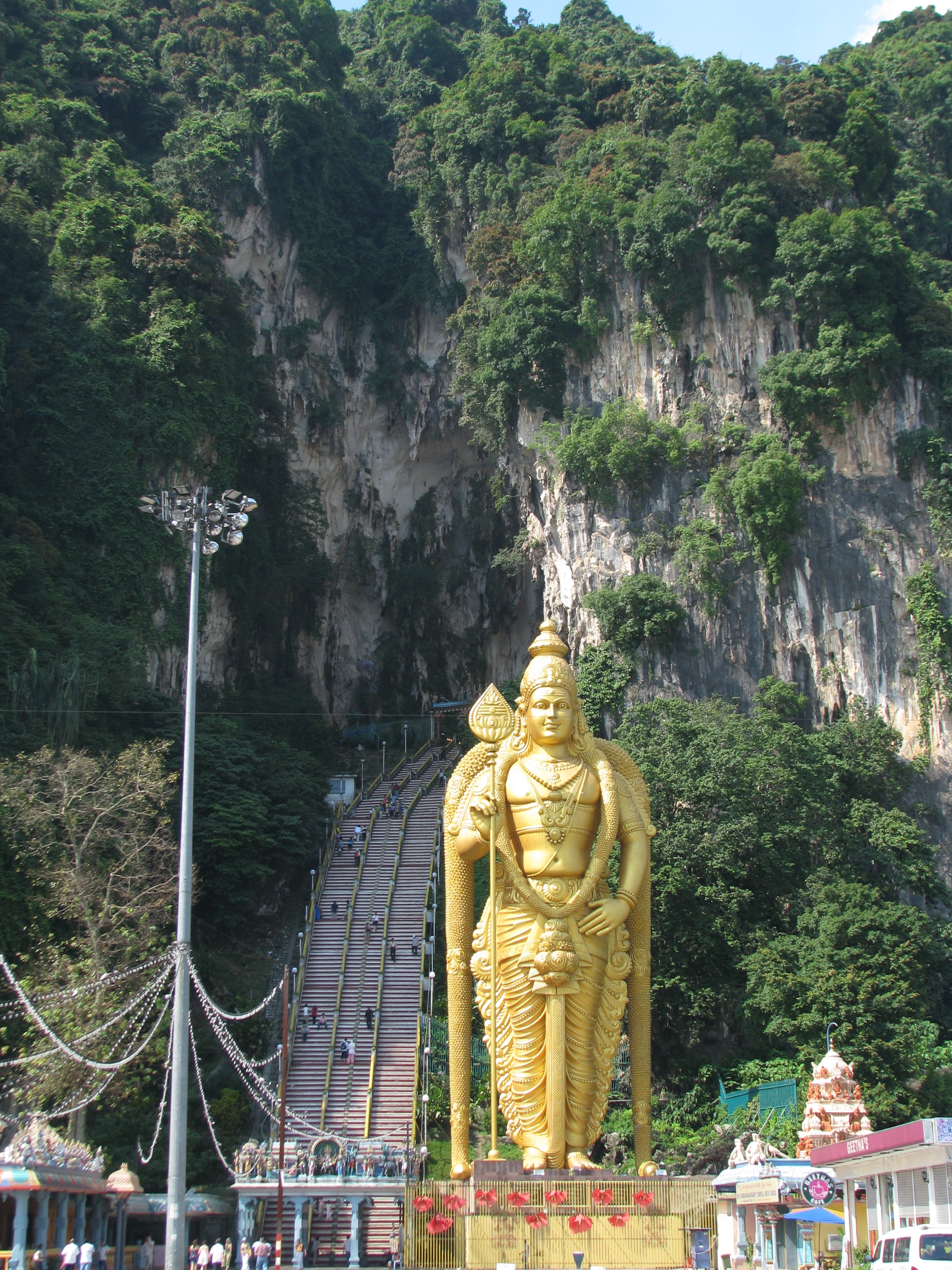
Go to Batu Caves on your second morning, early. The temple cave is free to enter, and the climb is 272 rainbow-painted steps past a 42.7-metre golden Murugan statue — the tallest statue in Malaysia, unveiled in January 2006. Take the KTM Komuter train from KL Sentral; it costs RM2.60 and takes about 35 minutes, and the station is opposite the cave entrance. The caves open from 06:00 to 21:00. Dress modestly — covered knees and shoulders — and keep food out of sight, because the macaques on the steps are bold. The nearby Ramayana Cave charges RM5 if you want to see it.
For the rest of KL, keep it simple. The KL Tower's observation deck sits at 276 metres with an open-air Sky Deck at 300 metres, and it is the better viewpoint for photographing the Petronas Towers themselves. Merdeka Square, the National Mosque and Masjid Jamek are all free to enter outside prayer times. Central Market is the place for souvenirs that are actually made in Malaysia, and Jalan Alor is where you eat at night — grilled satay, char kway teow and fresh fruit juices at plastic tables, with most dishes at hawker prices.

If the first day feels rushed, consider a guided half-day: this private half-day Kuala Lumpur and Batu Caves tour on Viator (about 4 hours, 4.9 from 140 reviews) covers the caves, Thean Hou Temple, Little India and the towers in one air-conditioned run for around US$30 per person — note the towers stop is photos only, and the observation deck ticket is not included.
Day 4: Kuala Lumpur to Penang by ETS train
The train is the best part of this transfer, and the one we would pick over flying. The ETS (Electric Train Service) runs from KL Sentral to Butterworth on the mainland opposite Penang Island. The Platinum service takes about 4 hours and costs around RM79; the Gold service takes about 4.5 hours and costs around RM59. Fares are dynamic, so book two to three weeks ahead on the official KTMB website for the best price — weekend and holiday trains sell out. There are roughly six services a day.
One thing first-timers get wrong: the train does not go to Penang Island. Butterworth is across the water from George Town, so you finish with the Rapid Ferry from Pangkalan Sultan Abdul Halim to Pangkalan Raja Tun Uda in George Town — a 10 to 15 minute crossing for foot passengers, linked to the station by a covered walkway. Budget about five hours door to door from central KL to your George Town hotel.
The alternatives are honest ones. The express bus from Terminal Bersepadu Selatan (TBS) costs RM35 to RM60 and takes 5 to 5.5 hours, plus the ferry. A flight takes about 50 minutes in the air from around RM70, but once you add the trips to and from both airports, it saves little time over the train and costs more. Take the train in the morning, watch the palm plantations and limestone hills roll past, and arrive in George Town with the afternoon still ahead of you.
Days 4–5 in George Town, Penang: UNESCO streets, murals and hawker food
George Town is the stop that surprises people most. It was inscribed on the UNESCO World Heritage List on 7 July 2008, jointly with Melaka, as the Historic Cities of the Straits of Malacca — a trading port where Malay, Chinese, Indian and European cultures built one city together. Visit Penang, the state's official tourism site, has maps and event dates if you want to plan around a festival. Walk it slowly. The heritage core is small enough to cover on foot in a day, and that is the right way to see it: pre-war shophouses, clan houses, mosques, churches and temples standing within a few streets of each other.

The street art is the part everyone photographs, and it has a real story. In 2012 the George Town Festival commissioned Lithuanian artist Ernest Zacharevic to paint six murals, and his “Little Children on a Bicycle” on Armenian Street — painted children with a real bicycle bolted to the wall — became the city's most photographed corner. Two years earlier, local studio Sculpture at Work had already scattered 52 steel-rod caricatures through the old streets, each one a bent-wire cartoon explaining how its street got its name. Both are free to find on foot; the Marking George Town map from the Penang Heritage Trust keeps you from wandering in circles.

Eat like the city eats. George Town's hawker food is the reason many travellers come back: char kway teow fried in a blazing wok, asam laksa with its sharp fish broth, nasi kandar with your choice of curries ladled over rice, and cendol with shaved ice for the afternoon heat. Malaysia is a Muslim-majority country, so halal food is the default almost everywhere — look for the halal sign and eat without worry. Between meals, climb Penang Hill on the funicular for the view over the island, visit the Khoo Kongsi clan house and the Cheong Fatt Tze Blue Mansion, and walk the Clan Jetties where families still live in houses on stilts over the water. Batu Ferringhi beach is a fine sunset spot, but be honest with yourself: you came to Penang for the streets and the food, not for the swimming. Kek Lok Si in Air Itam, Malaysia’s largest Buddhist temple, is worth a spare morning — its seven-storey pagoda and 30-metre bronze Kuan Yin statue are the payoff.

Day 6: Penang to Langkawi — fly, the ferry is gone
Read this part carefully, because most older guides get it wrong. The direct passenger ferry from George Town's Swettenham Pier to Langkawi's Kuah Jetty was suspended during the pandemic and has not resumed. Any website still showing a 2.5-hour boat from George Town is out of date, and so are the ticket sellers still listing it. Do not plan your day around a boat that no longer sails.
Fly instead. AirAsia and Firefly run direct Penang to Langkawi flights of about 35 to 40 minutes, usually for RM80 to RM200 when booked a few weeks ahead. Door to door it takes around 2.5 to 3 hours once you count both airports, which is still faster than the old ferry ever was. Book the morning flight and you are on a Langkawi beach by lunch.
The cheaper alternative is the overland-and-ferry route: bus from Penang to the Kuala Kedah jetty on the mainland (about 1.5 to 2 hours), then the ferry to Kuah (about 1 hour 45 minutes). All in it takes 4 to 5 hours and costs roughly RM60 to RM80. It is the budget choice and you still get a sea crossing — just not from George Town. Ferries also run from Kuala Perlis (about 1 hour 15 minutes). Whichever way you go, check the sailing times the day before: the first boats leave around 7 or 8 in the morning and the last return is usually around 6:30 in the evening, and peak-season sailings sell out.
Days 6–7 in Langkawi: SkyCab, beaches and the mangroves
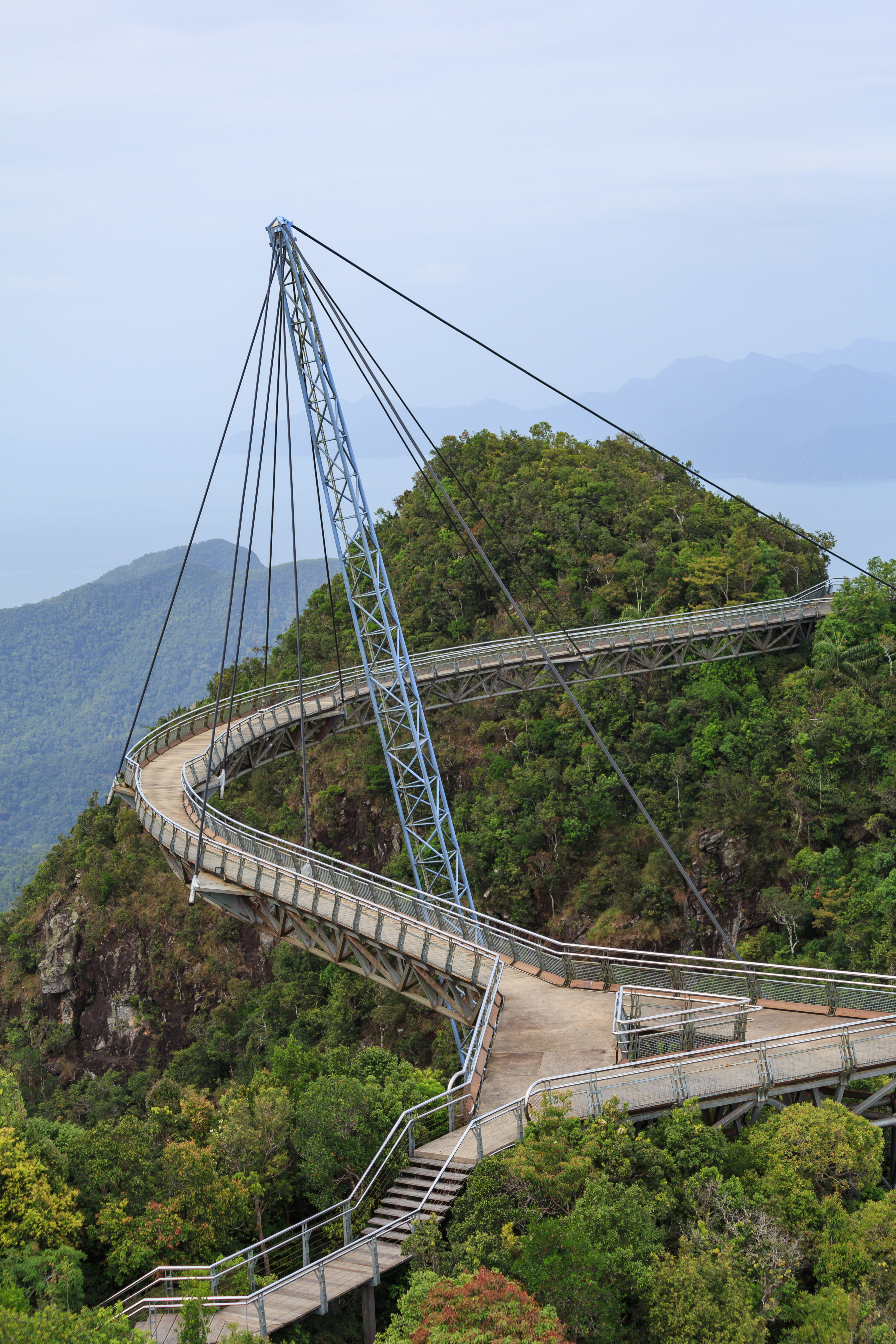
Langkawi is the slow half of the trip, and that is the point. The island is duty-free, quiet and spread out, and Tourism Malaysia lists current events and deals if you want to time a festival. Plan two unhurried days rather than a race between sights. Start day seven at the SkyCab. The cable car climbs to 708 metres on Gunung Mat Cincang, and the standard return ticket for a non-Malaysian adult is RM85 (RM65 for a child); the combo that adds the 125-metre curved Sky Bridge is RM89 (RM68 for a child). It opens at 09:30 and closes at 18:00. Go in the first slot or the last hour to cut the queues, and book online the day before in high season, because the gondolas fill from 10:30 onwards. When the cable car closes for maintenance, the bridge closes with it, so check the operator's calendar before you build your day around it.
Pantai Cenang is the main beach strip — restaurants, massage huts and sunset bars in one walkable line — and the airport is only about 10 minutes away. From there the island splits two ways: north to the quiet beaches and the Kilim mangrove tour through the geoforest park (about RM60 to RM80 per person), and south to Kuah town and Eagle Square for the duty-free shopping. Island-hopping boat trips run from Cenang in the morning and are worth it on a calm day; if the sea is rough, the operators cancel, so keep the afternoon free as a backup.

Two honest warnings. First, Langkawi is not a nightlife island — after dinner most places wind down, and that is fine if you came to rest. Second, the island is spread out and public transport is thin, so budget for Grab or a rental car; if you rent, carry an international driving permit, because rental desks ask for it. And remember the alcohol rules work in your favour here: as a duty-free island, Langkawi is the one place in Malaysia where a drink costs noticeably less, which is why so many travellers do their souvenir shopping in Kuah before flying home.
What a 7-day Malaysia trip costs from Pakistan: the honest budget
Here is the total, priced from the figures we checked in November 2026 at RM1 ≈ PKR 68. A careful budget trip runs about PKR 200,000 to 255,000 per person: return flights PKR 135,000 to 190,000, the e-visa about PKR 8,500 to 9,500, six nights in budget hotels or hostels, hawker meals, the ETS train, the Penang–Langkawi flight and the main tickets. A comfortable mid-range trip, with 3–4 star hotels and a few guided tours, comes to about PKR 397,000. Luxury, with 5-star stays in KLCC and a beach resort in Langkawi, runs about PKR 685,000 or more. Once you land, a budget traveller spends roughly PKR 14,000 a day on the ground; mid-range is about PKR 31,000.
The mistakes that cost real money are boring ones. Booking the Petronas Towers a day ahead and finding it sold out, then paying a reseller. Trusting an old Penang ferry timetable and losing a morning. Changing money at the airport instead of in the city. Roaming on a Pakistani SIM instead of buying a local one at KLIA. And the biggest: booking flights last-minute around Eid or Christmas, when the same seat costs nearly double. None of these are exotic. All of them are avoidable if you book the flights, the e-visa and the tower tickets in that order, at least a month before you go.
Malaysia works so well for a first trip abroad from Pakistan because almost nothing about it is hostile to a Pakistani traveller: halal food everywhere, English widely spoken, direct flights, and a visa you can get from your phone. The trade-off is that it is not the cheapest trip in the region — the flights alone are more than a week in northern Pakistan. If you want mountains first and Malaysia second, start with the valleys we know best: our Hunza guide, Skardu guide, Fairy Meadows guide and Deosai guide cover the trips we film for the channel, and the full list is on our guides page — including the 7-day northern Pakistan itinerary from our second video. Malaysia is the trip you take when you want the world to feel easy. Northern Pakistan is the trip you take when you want it to feel like yours.