 Simple Paint Travel
Why Neelum is Pakistan's greenest valley
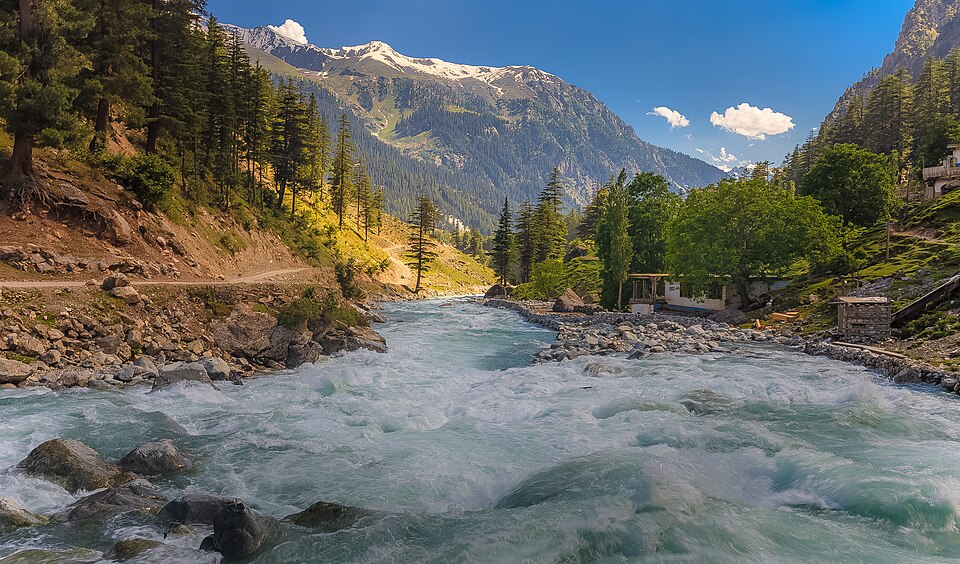
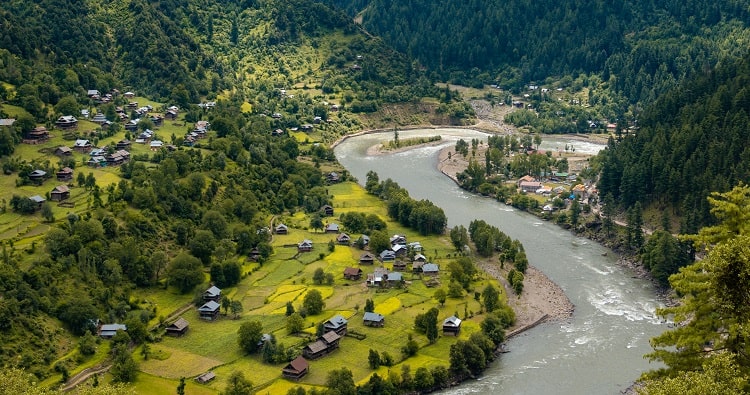
Stand anywhere in Neelum in June and count the greens: the river's turquoise, the rice-terrace emerald, the pine-dark slopes, the pale new leaves of walnut and maple. Neelum gets the rainfall the Karakoram misses, and it spends it all on vegetation. The valley runs northeast from Muzaffarabad along the Neelum River — the Kishanganga of older maps — with the Line of Control never far away across the water, a fact that gives the valley its poignancy: villages on both banks, one river, one people, a border drawn through the middle of the view. For travellers, that means two things. First, some stretches and viewpoints have rules — carry your ID, expect checkpoints, and follow local guidance about photography near sensitive spots. Second, Neelum has a calm, resilient, deeply hospitable culture that has lived with that reality for generations and still sets an extra place at the table for guests. The valley is less developed than Swat and wilder than it looks: landslides after heavy rain can pause the road, and mobile signal fades as you climb. Go with time in hand and patience packed. Neelum rewards the unhurried like nowhere else in this blog.
How to reach Neelum Valley: the Muzaffarabad road
Every Neelum journey starts in Muzaffarabad, Azad Kashmir's capital, about 3–4 hours from Islamabad via Murree and the Kohala bridge — a pretty drive in itself, dropping through pine hills to the Jhelum river. From Muzaffarabad, the Neelum road turns up the valley and simply follows the river for the next 200 kilometres: Athmuqam (the district town, roughly 80 km in) is the last big bazaar; Keran and Sharda come in the middle stretch; Kel is the usual road's-end hub around 155 km from Muzaffarabad; Taobat lies beyond, by jeep. The road is paved in long stretches and rough in others, and progress is measured in beauty per hour rather than kilometres — plan a full day to reach Kel with stops, because you will stop: for waterfalls pouring onto the road, for bridges, for tea stalls above the river, for the view at every third bend. Public transport (coasters and jeeps) runs the valley, but hiring a car or jeep with a local driver transforms the trip — the driver knows which waterfall is running, which dhaba has fresh trout, and which bend hides the shot of the day. Fill fuel and cash in Muzaffarabad; both thin out up-valley.
Keran and the river villages: Neelum's gentle middle
About halfway up the valley, Keran is where most travellers first fall for Neelum. The village spreads along a bend where the river runs wide and calm, hotels and guesthouses line the bank with lawns running down to the water, and across the river — close enough to see houses, fields and daily life — lies the other side of Kashmir. It is a place for slow evenings: tea on the lawn, the river changing colour as the light fails, and a sky full of stars reflected in still pools. Upstream and down, the pattern repeats with variations: Dowarian, where the track to Ratti Gali Lake branches off; Shardah's approach through narrowing gorge; villages of wooden houses with carved balconies and corn drying gold on every roof. Stay a night in Keran on the way up or down — it breaks the long road beautifully and gives you the valley's signature experience: waking to the sound of that impossible river, mist on the water, and breakfast appearing as if the valley itself cooked it. Neelum's hospitality is not a slogan. It is a schedule: tea, then food, then more tea, then directions, then an invitation.
Sharda: the ancient university town on the river
Sharda is Neelum's soul — a small town at a bend of the river where two valleys meet, famous across Kashmir's history as a seat of learning. The ruins of Sharda Peeth, an ancient temple-university that drew scholars from across the region more than a thousand years ago, stand above the town: weathered stone walls and gateways on a green shoulder, quiet, dignified, and far less visited than they deserve. Walk up in the morning, when mist lifts off the river and the stones are yours alone. Below, modern Sharda is a traveller's crossroads — bazaar, jeeps, hotels, and the junction where the Kel road continues and local tracks branch into side valleys like the Surgun. The setting is the thing: Sharda sits where the Neelum is joined by tributaries, surrounded by steep green walls, and at dawn and dusk the whole bowl fills with soft light and woodsmoke. Give Sharda a night if your schedule bends; most tours rush through to Kel and miss the valley's most storied ground. History in Pakistan is often a fort on a hill. In Sharda it is a library's ghost above a river — and it lingers in the mind longer than either.
Arang Kel: the village on a shelf above the world
And now the place that justifies the whole journey. Above Kel, across the river, a green shelf hangs on the mountainside — and on it sits Arang Kel, a village of wooden houses, terraced fields and orchards that looks arranged by a painter with a soft spot for impossible beauty. (Our paint brush approves entirely.) To reach it: cross from Kel by the chairlift-dolly over the river — a short, swinging, unforgettable ride — then hike 30–45 minutes up a clear trail through forest to the shelf. What you find is a complete village, not a viewpoint: families farming terraces their ancestors cut, children walking to school along the shelf's edge, guesthouses and cafés serving the trekkers who make the climb. Stay the night if you possibly can. Arang Kel at dawn, with mist in the valley below and the shelf floating green above it, and at dusk, when the lights of Kel twinkle far beneath your feet, are two of the finest hours in Pakistani travel. Practical notes: carry everything in a small pack (porters can help), expect simple guesthouses and glorious food, and book ahead in season — the shelf is small and word has spread. Arang Kel is the Neelum argument in one village: the harder the last mile, the softer the landing.
Kel, Taobat and the end of the road
Kel is the valley's working hub — bazaar, jeeps, hotels, and the chairlift to Arang Kel — and for many travellers the end of the paved story. But the valley has one more chapter: Taobat, the last village, some 40 kilometres further by jeep track where the road finally gives up. Taobat is where the Neelum enters Pakistan, spreading into braided channels across a wide, flat, astonishingly green valley floor, with wooden houses, potato fields, and mountains standing back to give the river room. It feels like the beginning of the world. The journey there is rough and the facilities simple — a handful of guesthouses and camps — and that is precisely its value: Taobat is for travellers who measure a place by silence. A second great excursion from this upper valley is Ratti Gali Lake, reached by jeep track from Dowarian lower down and a short hike: a jewel of an alpine lake at about 3,700 metres, ringed by peaks and wildflowers, open only in the summer months and already legendary among Pakistani trekkers. Between Taobat's river flats and Ratti Gali's high bowl, upper Neelum holds a full extra trip inside the trip — budget the days, and it will quietly become the part you describe first when you get home.
The best time to visit Neelum Valley (and permits, honestly)
Neelum's season runs May to October, and the valley wears each month differently. May brings fresh green and high rivers as the snow melts; June–July is the valley at its lushest, with waterfalls at full voice — and the monsoon building, so carry rain gear and schedule slack for road pauses after heavy rain. August is peak green and peak visitors. September–October is the connoisseur's window: rivers calming, light turning gold, walnut and maple colouring the slopes, crowds gone. Winter closes the upper valley under snow; Keran stays reachable longer but the magic dims. On permits and rules, honestly: Pakistani citizens should carry their CNIC; foreign nationals need the relevant permissions for Azad Kashmir and should arrange them well in advance through official channels, as rules for areas near the Line of Control change — check the current position before travelling, use a reputable local operator, and follow checkpoint instructions cheerfully. Within the valley, hire local drivers, ask before photographing people or anything sensitive, and dress modestly in villages. None of this is burdensome; it is the ordinary courtesy of a guest, and Neelum returns it tenfold.
Where to stay, what to eat, and how Neelum connects
Neelum's stays are family guesthouses and small hotels strung along the river — Keran for lawns and sunsets, Sharda for history, Kel for hub convenience, Arang Kel for the shelf (simple rooms, priceless mornings), Taobat for the end of the road. Book ahead in season; carry cash; expect home cooking and mean it as praise: the valley's tables run on river trout, local red rice, walnuts, wild greens, and a hospitality that treats 'enough' as a starting point. Budget travellers will find Neelum kind; the main cost is transport, so share jeeps where you can. Finally, place Neelum on your bigger map: it pairs naturally with Swat as Pakistan's two green valleys — Swat the easy garden, Neelum the wild one — and contrasts beautifully with the high, dry drama of Hunza and Deosai in our 7-day itinerary. Do the greens first and the giants after, or the reverse; either way, do not leave Pakistan's valleys half-seen. The river is waiting, turquoise as ever, and the road — slowly, beautifully — follows it all the way to the end.
The waterfalls of Neelum: Dhani, Kutton and the roadside falls
Neelum's rainfall has to go somewhere, and it goes over edges — the valley is stitched with waterfalls, and chasing them is one of its quiet sports. The famous one comes early: Dhani Waterfall, near the valley's entrance on the Muzaffarabad road, where a tall white ribbon drops beside the road into a pool of stalls and spray — the tallest fall in the valley and everyone's first stop, best after rain when it roars. Further up, near Keran, the Kutton (Jagran) stream tumbles through a side valley of guesthouses and trout water, its falls a short walk from the road and a favourite picnic roar. But the honest list is longer than any guide's: after heavy rain, unnamed falls pour from every side valley, silver threads appearing on green walls for a day and vanishing — your driver will know which bend is performing this week. Treat waterfalls as the valley's punctuation: stop, stretch, drink tea within earshot of falling water, and continue. A word of respect for the obvious: these streams flash-flood in monsoon rain, and their rocks are polished glass. Admire from the bank, swim nowhere near the drop, and let the valley's water stay beautiful rather than memorable for the wrong reason.
Photographing Neelum: mist, wood and the turquoise river
Neelum is the most photogenic valley in this blog per kilometre, and the least forgiving of lazy hours. The river photographs best in the morning, when the light comes over the eastern wall and the turquoise ignites against dark forest; by afternoon the colour flattens and the mist begins its evening work. That mist is your second subject: Neelum's dawns pour cloud through the side valleys like slow rivers above the real one, and the wooden villages — balconies carved, corn gold on the roofs, smoke rising straight in the still air — emerge from it piece by piece. Set alarms; this valley pays its photographers in dawns. Arang Kel is the masterpiece location, worth two mornings (mist below the shelf at sunrise, Kel's lights from above at dusk), while Keran's bend and Sharda's river junction are the classic frames lower down. Practical notes: rain is a feature, not a bug — pack protection for the camera and keep shooting as the valley turns silver; a polariser, if you use filters, cuts the river's glare and deepens that impossible colour; and always ask before turning a lens on people, particularly near the Line of Control areas where your driver will advise you anyway. Neelum does not need your help to look unreal. It only needs you awake early.
A perfect 3-day Neelum plan, day by day
Here is the valley compressed into the trip we would take ourselves. Day 1 — The river road: leave Muzaffarabad after breakfast, stop at Dhani Waterfall while it still roars from the night, lunch in Athmuqam, and reach Keran by afternoon for the first riverside evening — tea on the lawn, the other Kashmir across the water, and an early night to the sound of the river. Day 2 — Sharda and the shelf: drive to Sharda for the ancient ruins in morning quiet, continue to Kel, cross by the chairlift and hike up to Arang Kel for the night — sunset from the shelf, dinner in a wooden guesthouse, and stars you will describe badly for years because words fail. Day 3 — The slow return: dawn on the shelf above the mist, hike and ride back down, and roll down-valley with waterfall stops to Muzaffarabad by evening. Have a fourth day? Spend it on Ratti Gali Lake in season, or push to Taobat and back — the valley's two great extensions, each worth the day. Notice the plan's shape: up in stages, sleep in the story's best room (the shelf), and never fight the road's pace. Neelum measures journeys in stops, not kilometres — plan like a guest of the river, and it will host you properly.
The wooden villages: Neelum's architecture of timber and terraces
Look closely at Neelum's villages and you are reading the valley's autobiography in wood. The traditional house is built for this climate and this slope: stone at the base where the hill bites, then storeys of timber — deodar and pine from the valley's own forests — with carved balconies, wooden latticework and roofs pitched for snow, all stacked down the terraces like the steps of the fields themselves. Corn hangs gold under the eaves to dry; firewood is stacked in walls of its own; and the whole structure is repairable by the family that lives in it, from materials the valley provides — an architecture of self-reliance refined over centuries. Villages like those around Sharda and Kel, and the shelf-top settlement of Arang Kel above all, preserve the pattern best: walk their lanes in the evening, when the wood glows in the low light and the carving casts its shadows, and the valley's beauty stops being scenery and becomes craftsmanship. Some houses now wear tin roofs and concrete additions — the modern world arrives everywhere, and comfort is not a crime — but the old wooden cores endure, and local guesthouses increasingly build in the traditional style by choice, which tells you where the valley's pride lives. Photograph the houses freely from the lanes; step inside only when invited — and when you are, notice everything: the carved pillars, the stove at the centre, the view framed like a painting by every window. Neelum's people did not just settle this valley. They composed it.