 Simple Paint Travel
The legend of Prince Saif-ul-Malook and the fairy queen
You cannot understand this lake without its story, because in Pakistan the story is the lake. The tale comes from the beloved Punjabi Sufi poem 'Saif-ul-Malook' by Mian Muhammad Bakhsh, one of the most treasured works in Punjabi literature. In it, Prince Saif-ul-Malook dreams of a fairy — Badri Jamala — bathing in a mountain lake, and spends years crossing deserts and mountains to find her, guided by saints, tested by jinns, and sustained by a love he has never seen awake. Local tradition holds that the fairies still descend to the lake on the fourteenth night of the lunar month, when the moon is full — which is why old guides will tell you, quite seriously, to visit under a full moon and keep your wishes ready. Retellings vary, as living legends do, but the heart of it never changes: this is a lake about longing, patience and a beauty worth travelling years for. When you stand at its shore at dawn, alone with the reflection of Malika Parbat, you will understand why a prince crossed the world for it. Some lakes you visit. This one you arrive at.
The lake itself: altitude, colour and Malika Parbat
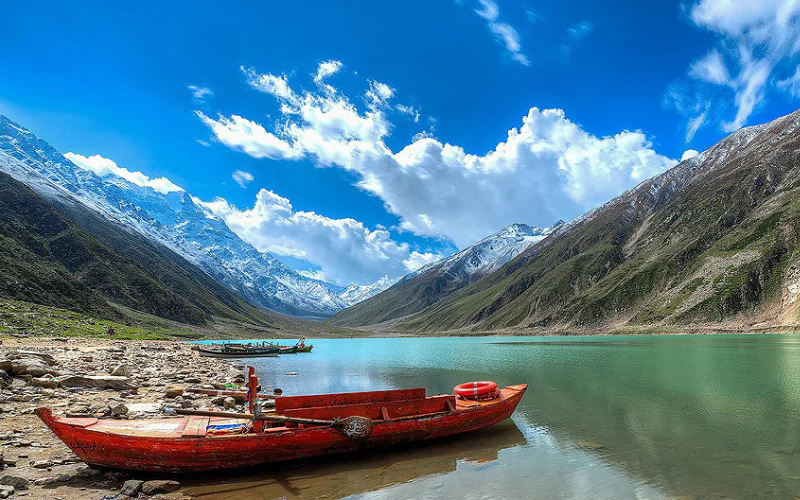
Lake Saif-ul-Malook sits at about 3,224 metres above sea level, cupped in a high amphitheatre above the Kaghan Valley, roughly 9 kilometres from Naran town. It is fed by glacial meltwater, which gives it its famous shifting colour — emerald, turquoise, deep steel blue — depending on the hour and the sky. The peak that owns the view is Malika Parbat (5,290 m), the highest mountain in the Kaghan/Hazara region, whose snowfields pour down toward the lake's far shore and double themselves in its morning mirror. The lake is about a kilometre long — an easy, beautiful walk around its shore — with meadows at its edges that fill with wildflowers in July. Boats wait at the near shore in season, and a short row out into the middle, with the amphitheatre closing around you and the town suddenly far below and far away, is worth every rupee. This is a glacial lake in a living landscape: its level and colour change with the seasons, and in winter it freezes into silence under metres of snow. Summer visitors get the postcard. They have earned it — the road here only opens when the snow allows.
How to reach the lake: the Naran jeep track and the hiking trail
Two ways climb from Naran to the lake, and choosing between them shapes your visit. The jeep track is the classic: local 4x4 jeeps, hired in Naran bazaar, climb the rough mountain track in about 45 minutes to an hour, bouncing past waterfalls and meadows to the parking area above the shore. It is bumpy, dusty, occasionally thrilling, and how almost everyone arrives — agree the price and waiting time before you set off, and go early. The hiking trail is the connoisseur's route: a clear path from town climbing steadily for roughly 2–3 hours through pine forest and open slope, with the valley widening behind you and the lake appearing, suddenly and completely, at the top. Hikers arrive to a quieter lake and a deeper satisfaction; many walk up and jeep down. A third, seasonal option is horseback, arranged in town. Whichever you choose, start early — by late morning the jeeps queue, the boats multiply, and the mirror-calm water is long gone. The lake at 8 a.m. and the lake at noon are two different places, and only one of them is the fairy tale.
Naran: the base town and the Kaghan Valley
Naran is the Kaghan Valley's beating heart — a one-street mountain town of hotels, jeep stands, trout restaurants and bazaars, strung along the Kunhar River at about 2,400 metres. It exists for the summer: when the road from Balakot and Kaghan opens, Naran wakes; when snow returns, it sleeps. Stay here for the lake, and use it as the hub for the whole upper valley: the river for evening walks and fresh trout dinners, the bazaar for supplies and shawls, and a hundred hotels from backpacker-simple to family-comfortable — book ahead in July, when half of Punjab seems to arrive at once. Naran is also a strategic crossroads of Pakistani travel: south, the road descends the Kaghan Valley to Balakot and Islamabad; north, it climbs past Batakundi and Lulusar Lake to Babusar Pass and Gilgit-Baltistan. Our 7-day route arrives over Babusar on Day 6 and leaves down the valley on Day 7 — Naran is the trip's last mountain night, and the lake above it is the last great view. Give both the evening they deserve: trout by the river, stars over the rooftops, and an early alarm for the lake.
The best time to visit Lake Saif-ul-Malook
The lake's season is short and dictated by snow: the Naran road and the lake track typically open in late May or June and close by October, with the exact dates set by each winter's snowfall. June brings fresh green, high water in the Kunhar and the lake at its fullest, with wildflowers starting. July and August are peak season — warmest days, every boat rowing, every hotel full, and the meadows in full flower; also the monsoon's edge, when afternoon cloud can veil Malika Parbat, so mornings matter even more. September is the quiet professional's pick: crowds gone, air washed clean, the lake calm and the light golden, though nights bite and services begin to wind down. Winter visits are effectively impossible for ordinary travellers — the valley closes, the lake freezes, and Naran empties. One timing tip that outranks all others: whatever your month, go to the lake early in the morning. The reflection of Malika Parbat exists only on still water, the fairies (and the light) keep dawn hours, and by ten o'clock the spell is politely over until tomorrow.
Beyond the lake: Lulusar, Babusar Pass and the Kunhar River
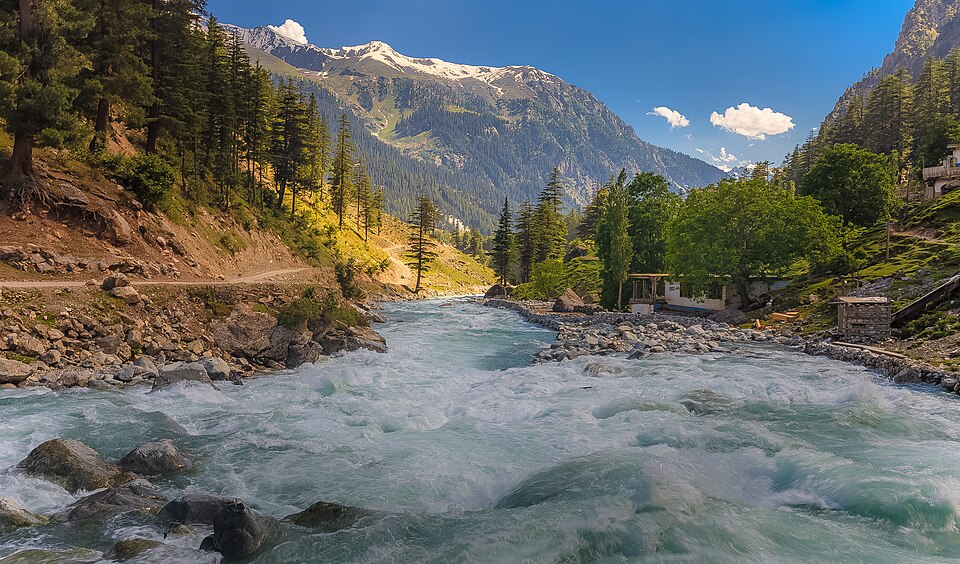
Travellers who see only the lake miss half the valley. North of Naran, the road climbs one of Pakistan's great scenic staircases. First, the Kunhar River itself — the valley's lifeline, running milky-turquoise from the high lakes to the Jhelum, with rafting near Naran in season and trout in every cold pool. Then Lulusar Lake, a serene sheet of water at about 3,410 metres where the Kunhar is born, ringed by meadows and usually seen in perfect quiet — it is the lake for people who found Saif-ul-Malook too famous. Beyond Lulusar, the road climbs to Babusar Pass (about 4,173 m), the historic gateway between Kaghan and Gilgit-Baltistan: a summit of prayer flags, tea stalls and a view that drops away toward Chilas and the Indus. Babusar is open only in the summer months, and crossing it — as our itinerary does on Day 6 — connects the green Kaghan to the stark Karakoram in a single morning. South of Naran, the valley unrolls through Kaghan town to Shogran and Siri Paye's meadows above, and Balakot at the valley's mouth. Base in Naran for three days and you can thread all of it: lake at dawn, Lulusar at noon, Babusar at sunset.
What to do at the lake: boats, horses, photography and quiet
The lake offers simple pleasures, and the trick is not to rush past them. Boating is the classic activity — a rowboat or small motorboat out toward the middle, where Malika Parbat's reflection completes itself and the shore noise falls away. Horse rides circle the meadows for children and the young at heart. Photographers should walk the shore path to the far side, where the crowds vanish, the angle on Malika Parbat improves, and the lake becomes a private audience. Tea stalls at the shore serve kahwa and snacks with the best view in Kaghan — a glass of green tea at 3,224 metres, watching cloud shadows cross the snow, is a complete travel experience by itself. What not to do: swim. The water is glacial, dangerously cold, and deeper than it looks; every few years it claims someone who underestimated it. Admire it, boat on it, photograph it — stay out of it. And take your litter back to Naran. This lake carries a nation's childhood memories; treat it like the heirloom it is.
Practical tips: costs, crowds and combining with the 7-day route
Costs at Saif-ul-Malook are refreshingly simple. The jeep from Naran is hired per vehicle (split it with fellow travellers), boats and horses are priced per ride — always agree the price before you climb in or on — and there is no entry ticket to the lake itself. Naran's hotels span every budget; food is standard Pakistani mountain fare at standard mountain prices, with trout the local splurge. Crowd management is the real skill: visit at dawn, avoid public-holiday weekends if you can, and walk ten minutes along the shore to escape 90% of the people. Combine the lake with the bigger picture and it shines brightest: on our 7-day northern Pakistan itinerary, you arrive in Naran over Babusar on Day 6 from Fairy Meadows, catch the lake at sunset or the next dawn, and drive home down the Kaghan on Day 7 — the perfect decompression after the Karakoram. If the mountains have hooked you and time remains, Pakistan's other great valleys are a click away: Swat for the gentle west, Neelum for Kashmir's green, and Hunza — always Hunza — for the roof of the world.
Ansoo Lake and the treks above Saif-ul-Malook
For travellers who reach Saif-ul-Malook and immediately wonder what lies higher, the answer is Ansoo Lake — the 'Teardrop Lake', a small, striking sheet of water shaped, from the ridge above, unmistakably like a tear. It sits high above Saif-ul-Malook at roughly 4,000 metres and is reached by a demanding day trek from the lake's shore: several hours of steep climbing on pony tracks and open slope, usually started at dawn with a local guide or horse arranged the day before in Naran. This is a serious walk at altitude, not a stroll — but the reward is one of Kaghan's great reveals: Ansoo in the foreground, and from the surrounding ridges, views back down to Saif-ul-Malook and across to Malika Parbat that reframe everything you saw from below. Trekkers in season (roughly July to September, when the snow clears) call it the valley's best day hike. Lesser-known trails also thread the hills behind the lake toward the meadows locals use for summer grazing. The pattern is the same one this whole blog keeps teaching: Pakistan's famous viewpoint is always the trailhead of a quieter, higher one. If your legs and lungs agree, follow it — with a guide, water, layers and an early start.
Shogran and Siri Paye: the meadows on the way home
South of Naran, where most travellers simply drive through on the way to Islamabad, the Kaghan Valley keeps a final gift: Shogran, a pine-forested plateau reached by a steep jeep track from Kiwai, and above it the twin meadows of Siri and Paye. Shogran is the valley's classic weekend escape — hotels and tea gardens scattered through the pines at about 2,360 metres, with a panorama that takes in the whole Kaghan range. From Shogran, jeeps and ponies climb to Siri Lake and then Paye meadows: rolling green pastures at the foot of Makra Peak, where shepherds graze flocks all summer and the view runs from Malika Parbat to the mountains of Kashmir. On a clear day, Siri Paye is the gentlest great view in the valley — no jeep drama, no altitude worry, just meadow, peak and sky. Build it into your journey as the decompression stop: after the high drama of Babusar and the Karakoram, a night in Shogran's pines and a morning on Paye's grass lets the trip land softly before the plains. Our 7-day itinerary drives past on Day 7 with a stop if time allows — travellers with an eighth day should give Shogran the night. It is the full stop at the end of the Kaghan sentence.
Your lake-day checklist: making the most of Saif-ul-Malook
A perfect day at the lake is mostly timing and small decisions, so here is the checklist distilled from everything above. The night before: agree your jeep and price in Naran (or set the hiking alarm), charge everything, and check the sky — a clear evening usually promises a clear dawn. At dawn: leave by 6–7 a.m. at the latest, carrying water, a warm layer, sun protection and small cash for boats and tea; the track is cold in the morning shadow and the lake rewards the early with its mirror. At the lake: walk the shore path ten minutes past the boat jetties to find your quiet, take the boat out while the water is calm, drink the kahwa, and photograph Malika Parbat's reflection before the breeze edits it. Midday: if you are hiking down, start before the sun peaks; if jeeping, use the wait for a slow lunch by the Kunhar River back in Naran. The mistakes to skip: arriving at noon with the crowds, swimming in glacial water, and leaving litter at a lake a nation loves. Do the day this way and Saif-ul-Malook stops being a stop on the Babusar road. It becomes what it has been for generations of Pakistanis — the lake you measure other lakes by, and the one you describe first when someone asks about the mountains.
Camping by the lake: joining the sunrise club
Most visitors meet Saif-ul-Malook between jeep arrival and jeep departure. A smaller, happier tribe meets it at dawn — because they never left. Camping near the lake, in the meadows set back from the shore where local operators pitch tents in season, rewrites the whole experience. The evening begins when the day jeeps descend: the boat engines stop, the stalls shutter, and the lake exhales into a quiet so complete you can hear Malika Parbat's snowfields ticking as they cool. Dinner is simple and hot; the stars, at 3,224 metres with no town glow, are neither. Then the night's real appointment: the fairies' hour. Local tradition, remember, brings them to the lake on moonlit nights, and campers wrapped in blankets at the shore at 2 a.m. — moon up, water glass, the mountain floating in both sky and lake — tend to stop arguing with the tradition. Dawn completes the membership: you are on the shore before the first jeep has left Naran, with the mirror reflection entirely yours and the day's first kahwa tasting like a medal. Practical notes: hire camping through Naran operators or lakeside arrangers, confirm warm bedding (nights are cold in every month), carry all litter out, and keep the camps to the designated meadows. The sunrise club has no fees and no roster. It has only an entry requirement — one cold, glorious night — and everyone who pays it calls it cheap at the price.